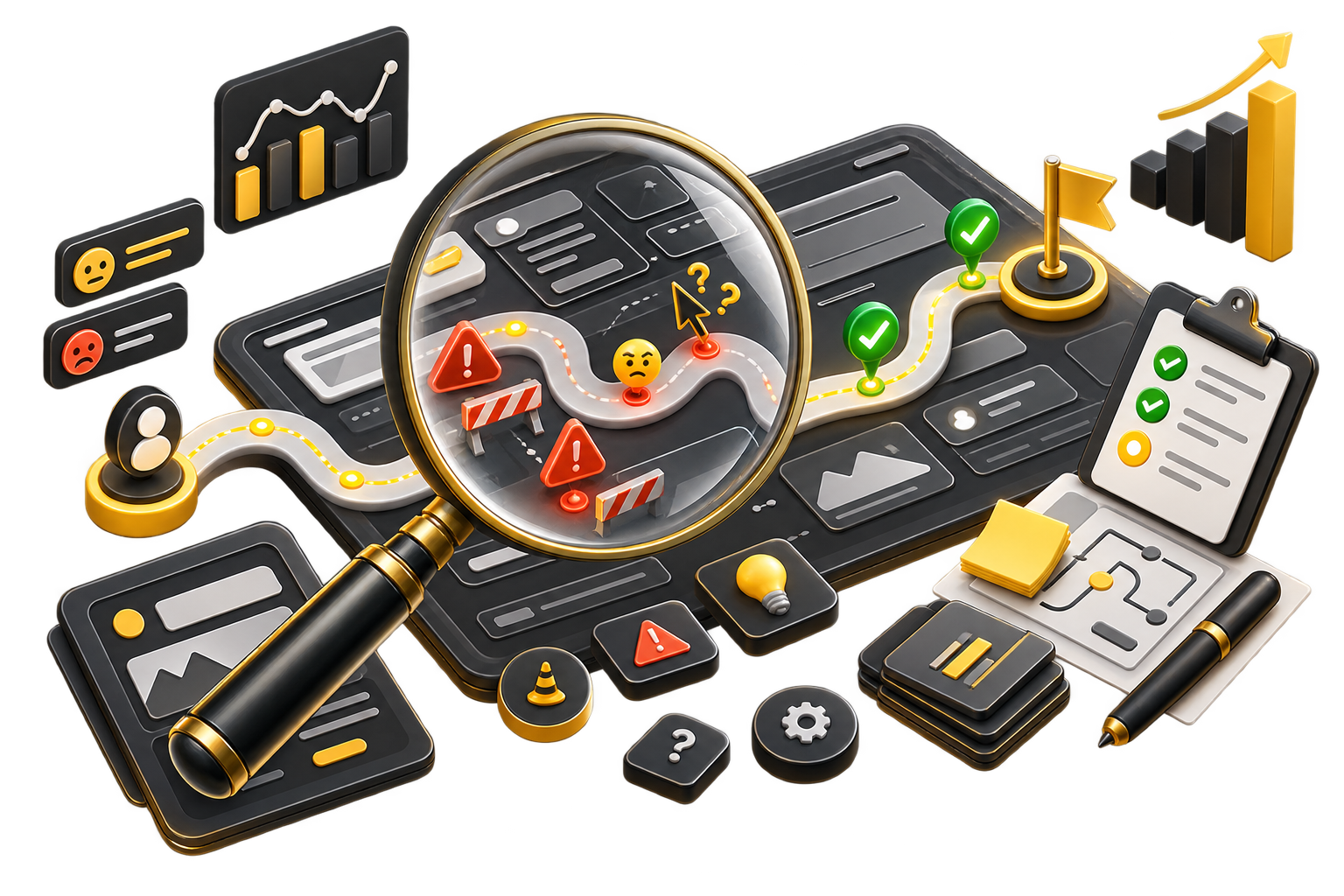
Product Discovery Before Delivery: Test the Four Big Risks
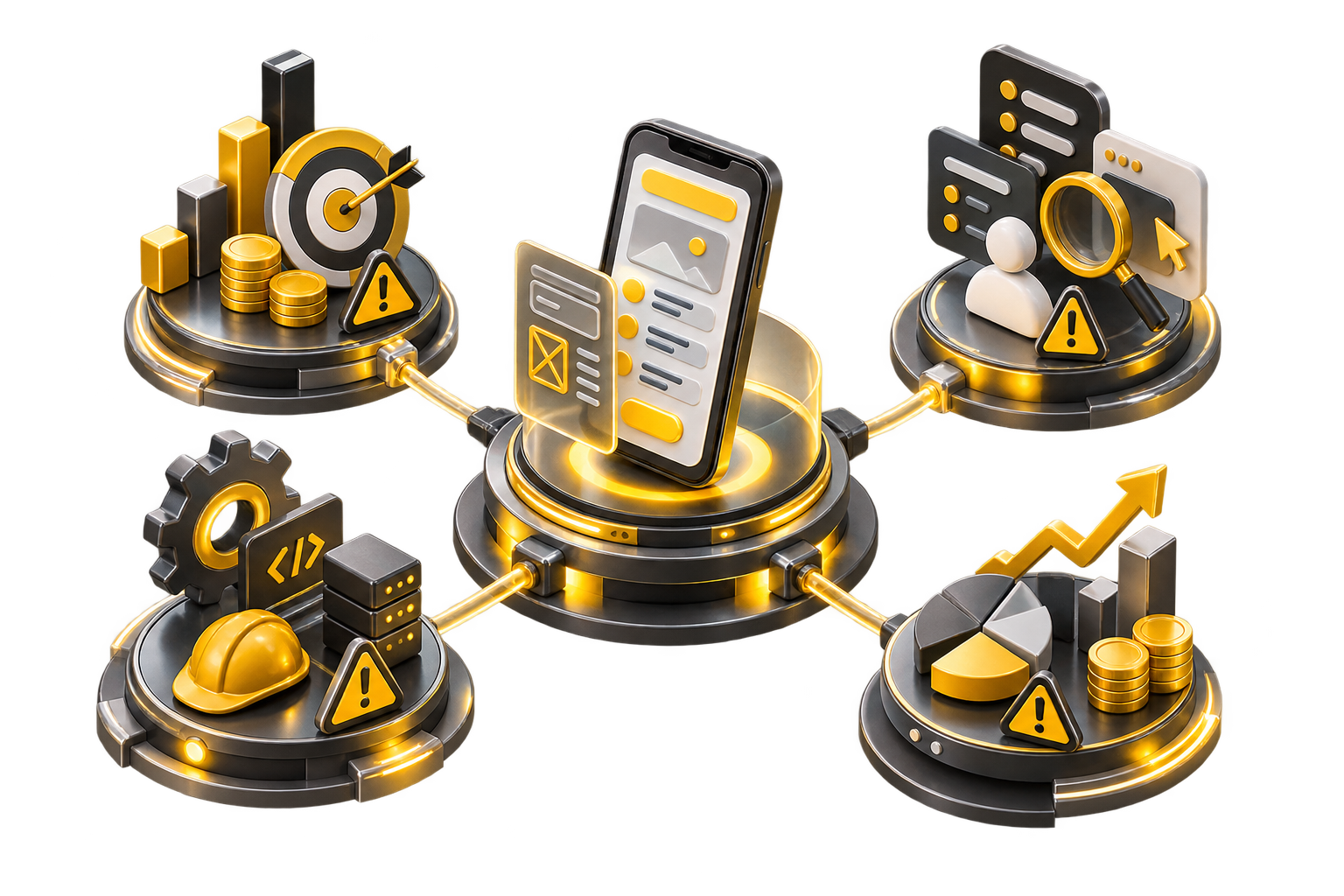
Test value, usability, feasibility, and viability before scaling delivery so teams solve a proven problem instead of shipping assumptions.
Delivery answers how to build and operate a solution. Discovery answers whether the solution deserves to be built. Mixing the two creates false certainty: teams estimate large features before they understand customer value, usability, technical feasibility, or business viability.
SVPG frames discovery around those four risks. The framework is useful because it focuses teams on evidence, not a specific workshop or methodology.
Name the riskiest assumption
Write the desired outcome, target user, problem, and proposed behavior. Then identify what must be true. A solution may be technically straightforward but fail because customers do not care, cannot understand it, or will not change their behavior.
- Value: will people choose or use it?
- Usability: can they understand and complete the task?
- Feasibility and viability: can we build, support, and sustain it?
Choose the cheapest credible test
Use interviews for context, prototypes for interaction, technical spikes for feasibility, data analysis for behavior, and commercial experiments for willingness to act. Tests should create evidence strong enough to change a decision.
- Match the method to the assumption.
- Define the decision threshold before seeing results.
- Test with realistic users, data, and constraints.
Keep discovery continuous
Discovery is not a phase that ends with a handoff. Product, design, and engineering should learn together while delivery progresses. Small releases reveal new risks and make it possible to adjust before investment compounds.
- Maintain an assumptions and evidence log.
- Review outcomes, not only shipped features.
- Stop, reshape, or expand work when evidence changes.
Final perspective
Good discovery spends a small amount of time and money to expose the uncertainty that could make a large investment fail.
Research references
This TivroTech article synthesizes the following primary and practitioner guidance with our own practical analysis: